
2026 DÜNYA KUPASI PRAGMATİK OYUNLAR / SAYILARIN OLUŞTURDUĞU SERAPLAR
- Emirhan Kınlak
- Jun 21
- 9 min read
(TR) Dünya kupasının başlamasıyla birlikte özellikle yeni formatta doğan en iyi üçüncülük şansını değerlendirmek isteyen görece düşük segment takımların reaktif oyunlarını çok fazla gördük. Ne yazık ki milli takımımız da bu oyunları tercih eden iki takıma kaybedip turnuvaya veda etti.

Bu süreç özelinde çok fazla istatistiki verilerin dile getirildiği ve gündem olduğunu gördük. Sayıların günümüz futbolunun olmazsa olmazı olduğun gerçeği yadsınamaz fakat değişken sayısının öngörülemez kadar fazla olduğu, belli kalıpların içinde kalmanın bir yere kadar mümkün olduğu futbolda, tüm olan biteni sayılarla açıklamak yerine, sayıların neler söylediğini anlamlandırmamız gerekir. Bu da hemen hemen her zaman karşımıza çıkan nicelik mi nitelik mi sorusunun cevabını aramakla mümkün.
Bu cevabı ararken Türkiye - Avustralya, Türkiye - Paraguay müsabakalarını inceleyeceğiz.

Avustralya takımının fiziksel olarak özellikle uzun, hamleli ve sert bir takım olduğunu turnuva öncesi de söylemek mümkündü. Bu profilde temel prensibi direkt hücum ve hücum geçişleri olan bir takıma karşı en tehlikeli olabilecek durumlardan bir tanesi de sonuçlandırılmayan ataklar, uzayan takım boyu, geri koşmak zorunda kalınması demek yanlış olmaz.
Pep Guardiola'nın özellikle prensip olarak benimsediği ve bir kesimce sıkıcı bulunan, sabırlı set hücumuna en doğru anı bekleyerek hücum etmesi de aslında bu sinsi geçiş oyunlarının tehditlerini bertaraf etme çabası olduğunu anlamak zor değil. Bunun için şu an aktif olarak literatürde kullanılan 2-3-5 den evirdiği 3-2-5 ve tercih ettiği oyuncular (stoper özellikli bek tercihleri Gvardiol ya da Stones'un orta sahalaşması gibi) bize referans olacaktır.
Bu tarz takımlara çok fazla şut girişiminde bulunmak pozitif bir durum mu ?
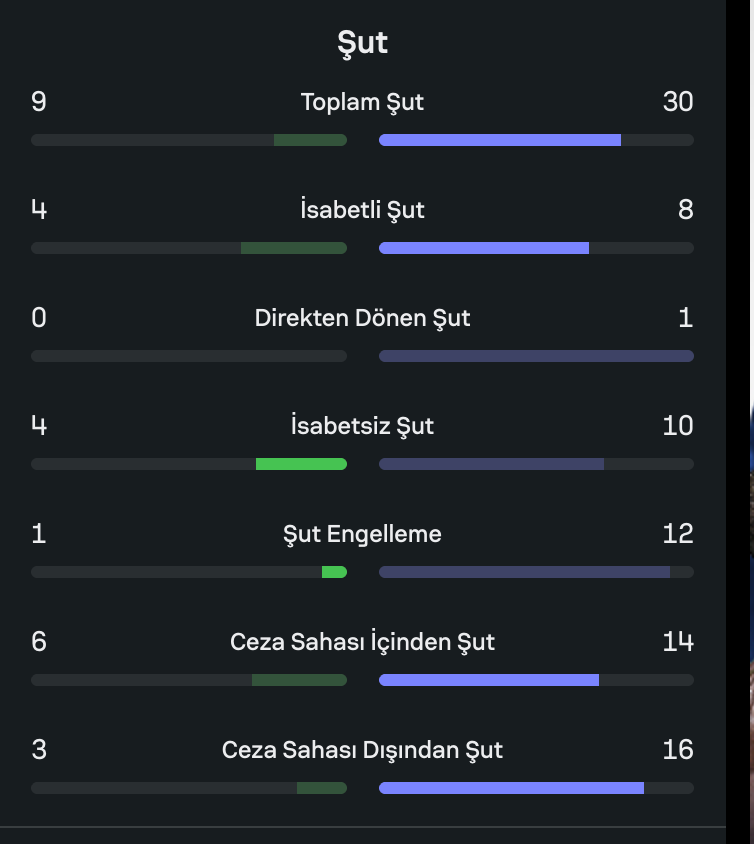
Türkiye milli takımının bu müsabakada 30 şut kullanması olumlu bir durum gibi gözükse de sonuçları üzerinde düşünülmesi gerekiyor. Türkiye bu müsabakayı 1.36 xG ile tamamladı.Ayrıca isabetli şut yüzdesi %26.7. Bu nicelikten çıkartabildiğimiz niteliğin oldukça az olduğunu gösteriyor.

Rakibin fiziksel olarak uzun boylu olması, kompakt ve derin blokta savunma yapmasından ötürü şut girişimlerinin kaleden uzaklaşmasına neden oldu. Bu da sonuçlanmayan her şutun aslında potansiyel bir geçiş tehdidi oluşturmasına ve zaman zaman da Türkiye'nin geri koşmak zorunda kalmasına neden oldu. Kağıt üzerinde gözüken baskın oyunun aslında Türkiye için sorunun temelini oluşturduğunu söylemek yanlış olmaz.


Şut sayısının yüksek olmasının oluşturduğu yanılgının bir benzerini koşulan total mesafelere bakarak da yaşayabiliriz. Avustralya'nın fazla koşmuş olması aslında Türkiye'nin topa sürekli sahip olmasından ve Avustralya takımının topsuz hareketliliğinin fazla olduğundan kaynaklandığını söylemek yanlış olmaz. Bu durumun pozitif mi negatif mi olduğu tartışılması gereken bir diğer konu.


Paraguay müsabakasına bu pencereden bakacak olursak Türkiye müsabakayı 2.17 xG ile tamamladı. Yaklaşık olarak %15,6 isabetli şut yüzdesi ile biten müsabakada Avustralya müsabakasına benzer bir durum söz konusu. Şut haritasında da benzer bir durum olduğunu görmek mümkün.
BENZER SENARYOLAR
Türkiye'nin düştüğü benzer bir duruma grubun ilk maçında Yeşil Burun Adaları'na karşı İspanya düştü.


Türkiye'nin rakiplerine göre kalitesi oldukça düşük olan Yeşil Burun Adaları, geçiş tehdidi olarak İspanya'ya sorun yaşatamasa da savunma anlamında Türkiye'nin yaşadığı sorunları İspanya'ya yaşattı.
İSPANYA VE TÜRKİYE'NİN KADRO SEÇİMLERİNDEKİ BENZERLİKLER / YAŞANAN BENZER SORUNLAR
Bu tarz kapalı savunmalarda sorun yaşayan İspanya ve Türkiye'nin oyun kurguları ve oyuncu seçimleri oldukça benzer. İspanya forvette Oyarzabal'ı tercih ederken, Türkiye Kerem Aktürkoğlu'nu tercih etti. İspanya sol kanat rolünde orta saha orjinli Gavi'yi tercih edereken, Türkiye, Arda Güler'i benzer rolde sağ kanat olarak tercih etti. Oyarzabal ve Kerem Aktürkoğlu'nun istatistiklerine bir göz atalım.👇🏻

Özellikle kapalı savunmalara karşı sahte 9 olarak görev alan kanat orjinli oyuncuların, fiziksel üstünlüğe karşı sorun yaşadığı gördük. Bunda alan bulamamaları, sırtı dönük oyun oynama becerilerinin görece kısıtlı olması önemli bir etken.
Bu tarz kapalı savunma yapan takımların zaaflarının özellike son çizgiye inildiği anlarda cutback zonea verilen paslar, Bekin dış koridor bindirmesi sonucunda ters ayaklı kanat oyuncusuna hazırlanan şutlar, rakip savunmanın yüzünü kendi kalesine döndüğü anlarda savunma bloğu ve kaleci arasına yapılan sert etkili ortalar sonucunda ortaya çıktığını söylemek yanlış olmaz. Buna referans olarak ABD'nin Avustralya'ya attığı golü ve Hollanda'nın Japonya'ya attığı golü gösterebiliriz. 👇🏻
TURNUVANIN YÜKSELEN TRENDİ KAPALI SAVUNMALAR
Dünya Kupası'nda görece düşük segment takımların tercih ettiği kompakt düşük blok savunmaları oldukça revaçta fakat bu durumu sadece düşük segment takımlara mal etmek doğru bir durum değil.

Arsenal takımı özellikle Şampiyonlar Ligi finalinde PSG'ye karşı benzer bir felsefeyle hareket ederek müsabakayı penaltılara götürmeyi başardı ve kupaya ortak oldu. Kazanamasa da bu durumla alakalı özellikle Pep'in yardımcılığını da yapmış İspanyol ekolünden gelen bir isim olan Arteta'nın dahi pragmatik oyunlara yönelmesi de oyunun gidişatı ve önümüzdeki süreçte karşımıza çıkabilecek senaryolarla alakalı bize fikir veriyor.
BİZİ NELER BEKLİYOR ?
Dünya Kupası sonrasında karşılaşacağımız olası manzara hakkında oynanan maçlar fikir sahibi olmamızı sağlıyor. Zaten yükselişte olan savunma baskın ekolün, turnuva sonrasında artarak devam edeceği düşüncesindeyim. Bu durum yüksek profilli takımların karşılacağı sorunları arttıracaktır. Özellikle Pep Guardiola'nın rakip geçişleri savunmak adına geliştirdiği 3-2-5 ve türevlerinin önümüzdeki günlerde değişebileceği düşüncesindeyim. Genel karşılama paterni olarak tercih edilen 5-4-1 / 5-3-2 dizilişlerine karşı 3-2-5'in zaman zaman kısırlığa sebep olduğunu, gerekli sayısal üstünlüğü sağlama konusunda sorunlar yarattığını söylemek yanlış olmaz.
Bunu referans alan düşük ve orta profilli reaktif takımlar bu doğrultuda hareket etmeye ve bu konuda uzmanlaşmaya devam edecektirdirler.
Yüksek profilli takımların bu soruna karşı üretebilecekleri çözümler belirleyici olacaktır. Bu duruma karşı zaman zaman çizgiye inebilen, düz hatta da etkili olabilen 1v1'i güçlü profillerinin kullanılabileceğini ve bu oyunculara talebin artabileceği düşüncesindeyim.
İç koridorları etkili kullanabilen box-to-box profilindeki merkez orta sahaların bu kapalı savunmalara karşı kullanımı da elzem. Her şeyin başında oyun her anlamda hıza evrilmiş durumda. Hızdan kastımız tabii ki mesafeleri en hızlı şekilde kat edebilmesi (savunma ve hücum geçişleri) fakat en hızlı şekilde düşünüp uygulayabilmek de kapalı savunmaların hareket ettirilip, boşluklar bulunması konusunda olmazsa olmaz durumunda.
Özetle futbol günümüzde duygular ve doğaçlamaların olduğu bir noktadan, kurguların baskın olduğu, planların fark yarattığı, oyuncuların kurguyla değer kazandığı, her detayın önem kazandığı, özellikle kapalı savunmaların revaçta olduğu senaryoda hücum duran toplarının efektif kullanma gereksinimin zirve yaptığı bir duruma evrilmiş durumda. Oyunun nereye evrileceğini hep beraber göreceğiz.
(ENG)
With the start of the World Cup, we frequently saw reactive styles of play, especially from relatively lower tier teams aiming to take advantage of the “best third placed” qualification format. Unfortunately, our national team also lost to two such teams and was eliminated from the tournament.
During this period, we saw a huge emphasis on statistical data, with numbers dominating the conversation. It’s undeniable that numbers are an essential part of modern football. However, in a game where the number of variables is almost unpredictable and staying within fixed patterns is only possible to a certain extent, we need to interpret what the numbers actually tell us rather than trying to explain everything solely through them. This ultimately brings us back to the classic question we often encounter: quantity or quality?
In searching for this answer, we will analyze the Turkey vs. Australia and Turkey vs. Paraguay matches.
Before the tournament, it was already clear that Australia is a physically strong side tall, aggressive, and powerful in duels. Against a team with this profile, whose main principles are direct attacking and transition play, one of the most dangerous situations is failing to finish attacks. This often leads to an overstretched team shape and forces you to make recovery runs, which can be extremely costly.
It’s not hard to see that Pep Guardiola’s well known principle of patient build-up play sometimes criticized as “boring” is actually an effort to neutralize the threats of these subtle yet dangerous transition attacks. By waiting for the right moment in set attacks, his teams aim to minimize exposure. His evolution from the 2-3-5 structure into a 3-2-5 shape, along with his player preferences (such as using center-back-type full-backs like Joško Gvardiol or inverting defenders like John Stones into midfield), serves as a clear reference point for this tactical approach.
Is attempting a high number of shots against such teams truly a positive thing?
Although Turkey attempting 30 shots in this match may seem like a positive indicator, it is necessary to evaluate the outcomes of these attempts. Turkey finished the game with an xG of 1.36, while their shot on target percentage was 26.7%. This suggests that the quality derived from this quantity was, in fact, quite low.
The opponent’s physical advantage being taller, more compact, and defending in a deep block led many of the shot attempts to be taken from long range. As a result, each unsuccessful shot effectively turned into a potential transition threat, often forcing Turkey to track back defensively. It would not be wrong to say that the seemingly dominant play on paper actually formed the core of Turkey’s problems in this match.
A similar illusion created by the high number of shots can also be observed when looking at total distance covered. Australia’s higher running distance can largely be attributed to Turkey’s dominance in possession and Australia’s increased off the ball movement. Whether this situation should be interpreted as a positive or a negative is, in itself, another point open to debate.
If we look at the Paraguay match from this perspective, Turkey finished the game with 2.17 xG. In a match that ended with approximately a 15.6% shot accuracy rate, a situation similar to the Australia game is observed. It is also possible to see a similar pattern in the shot map.
SIMILAR SCENARIOS
Spain fell into a situation similar to Turkey’s in their opening group match against Cape Verde.
Cape Verde, whose overall quality is significantly lower compared to Turkey’s opponents, could not trouble Spain with transition threats. However, defensively, they caused Spain problems similar to those Turkey experienced.
SIMILARITIES IN SPAIN AND TURKEY’S SQUAD SELECTIONS / SIMILAR ISSUES ENCOUNTERED
Spain and Turkey, both struggling against deep and compact defensive setups, show quite similar patterns in their game structures and player choices. While Spain preferred Mikel Oyarzabal as a forward, Turkey opted for Kerem Aktürkoğlu. On the left wing, Spain used a midfield origin player, Gavi, whereas Turkey chose Arda Güler in a similar role on the right wing.
Now, let’s take a look at the statistics of Oyarzabal and Kerem Aktürkoğlu. 👇🏻
We observed that, especially against deep and compact defenses, wide-origin players deployed as a false nine struggle against physical superiority. A key reason for this is their difficulty in finding space, along with their relatively limited ability to play with their back to goal.
It wouldn’t be wrong to say that the weaknesses of teams that defend in a low block tend to emerge especially through passes into the cutback zone after reaching the byline, shots set up for an inverted winger following an overlapping full-back run down the outside channel, and hard, effective crosses played into the space between the defensive block and the goalkeeper when the opposition’s back line is facing its own goal. As references, we can point to the goal the USA scored against Australia and the goal the Netherlands scored against Japan. 👇🏻
THE RISING TREND OF THE TOURNAMENT: DEEP DEFENSIVE BLOCKS
Compact low block defenses, typically preferred by relatively lower tier teams in the World Cup, have become quite widespread. However, it would not be accurate to attribute this trend solely to lower-tier teams.
Arsenal, particularly in the Champions League final against PSG, adopted a similar philosophy and managed to take the match to penalties, effectively becoming a contender for the trophy. Even though they did not win, the fact that Mikel Arteta who comes from the Spanish school and has worked as an assistant to Pep Guardiola has also leaned toward pragmatic approaches gives us insight into the direction of the game and the potential scenarios we may encounter in the near future.
WHAT AWAITS US?
The matches played in the World Cup already provide clues about the landscape we are likely to face afterward. I believe that the already rising, defense oriented approach will continue to grow even stronger following the tournament. This will increase the challenges faced by high-profile teams. In particular, structures like Pep Guardiola’s 3-2-5 developed to control opposition transitions may undergo changes in the near future. Against commonly used defensive shapes such as 5-4-1 or 5-3-2, the 3-2-5 can at times become sterile and struggle to create the necessary numerical superiority.
Teams of lower and mid-level quality that take this as a reference point will continue to move in this direction and further specialize in it.
For top tier teams, the solutions they produce against this problem will be decisive. Against such setups, profiles who can reach the byline, operate effectively in straight line attacks, and excel in 1v1 situations may become increasingly valuable and in higher demand.
Additionally, box-to-box central midfielders who can effectively utilize the half spaces will be crucial against deep defensive blocks. Above all, the game has evolved toward speed in every sense. By speed, we not only mean covering distances quickly (in both attacking and defensive transitions), but also the ability to think and execute rapidly something essential for disrupting compact defenses and finding spaces.
In summary, football has evolved from a space driven by emotion and improvisation into one where structure dominates, plans make the difference, players gain value through systems, and every detail matters. In a context where deep defensive blocks are increasingly prevalent, the effective use of attacking set-pieces has reached peak importance. We will all see together where the game continues to evolve.